

Winter Saag Sabji Recipe

50 Mins

4-5 People

05 Mins
Winter Saag Sabji Introduction
Winter Saag Sabji is a perfect recipe for the cold season. This dish is made using fresh winter greens and cooked in a very simple desi way. The taste is strong, earthy, and full of winter comfort. When mustard oil is heated properly and mixed with greens, it gives the saag a very authentic flavor.
I always say that if you want to enjoy winters properly, you must make Winter Saag Sabji. It tastes best when eaten hot and fresh. I like to serve it with lacchedar mirchi paratha, and this combination makes the meal complete. It is simple food, but very satisfying and full of flavor.
Ingredients of Winter Saag Sabji
Portion / Servings: 4–5 pax
Preparation Time: 05 minutes
Cooking Time: 50 minutes
For Blanching Methi Leaves
- Methi leaves – 1 bunch
- Water – for boiling
- Salt – ½ tsp
For Making Winter Saag Sabji
- Mustard oil – 2 tbsp
- Mustard seeds – 1 tsp
- Curry leaves – 7–8 pcs
- Dry red chilli – 1 pc
- Garlic, chopped – 1 tbsp
- Onion, sliced – 2 pcs
- Green chilli, chopped – 1 tsp
- Palak, chopped – 1 bunch
- Spring onion, chopped – 5–6 pcs
- Bathua leaves – 1 bunch
- Methi leaves, blanched & chopped – from above
- Dill leaves (Suva) – ½ cup
- Salt – 1 tsp
- Turmeric powder – ½ tsp
- Red chilli powder – ½ tsp
- Coriander powder – 1 tsp
- Garam masala powder – ½ tsp
- Tomato, sliced – 1 pc
- Tamarind pulp – 1 tsp
For Mirch Paratha
- Wheat dough – as required
- Ghee – as required
- Ajwain – a pinch
- Red chilli powder – a pinch
- Salt – ½ tsp
- Flour – for dusting
Instructions of Winter Saag Sabji
Step 1: Blanch the Methi Leaves
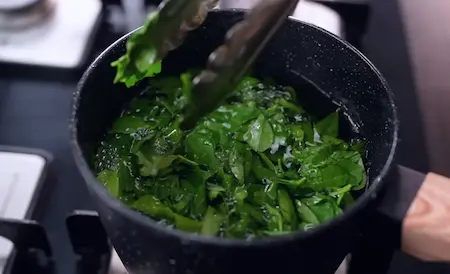
Begin by bringing water to a boil in a large pot with a pinch of salt. Add the methi leaves and blanch them until tender and bright green. This step helps remove any bitterness and makes the leaves soft for cooking. Once blanched, drain the leaves and allow them to cool slightly. Roughly chop the blanched methi leaves and keep them aside for later use. Blanching only the methi leaves ensures they retain their unique flavor and texture while blending well with the other greens.
Step 2: Prepare the Tempering
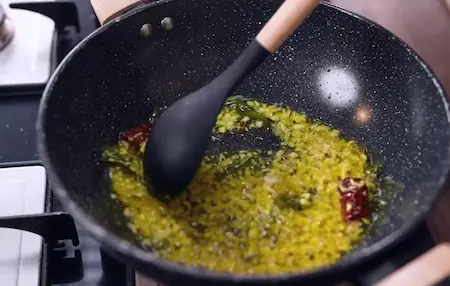
Heat mustard oil in a wide pan until it begins to smoke lightly. Reduce the heat to medium and add mustard seeds. Let them crackle, releasing their aroma. Carefully add curry leaves and a dry red chilli to the pan. Stir the tempering gently as it splutters. This step infuses the oil with flavors that form the base of the Winter Saag Sabji.
Step 3: Sauté Aromatics
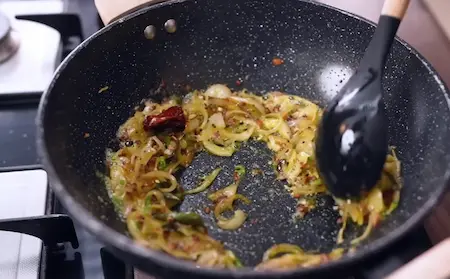
Add chopped garlic to the tempered oil and sauté until it turns golden brown and fragrant. Next, add sliced onions and sauté until they become soft and lightly browned, ensuring they caramelize slightly for natural sweetness. Stir in chopped green chilli briefly to release its heat. Cooking the aromatics properly at this stage creates a rich and flavorful base for the Winter Saag Sabji.
Step 4: Add Leafy Vegetables in Stages
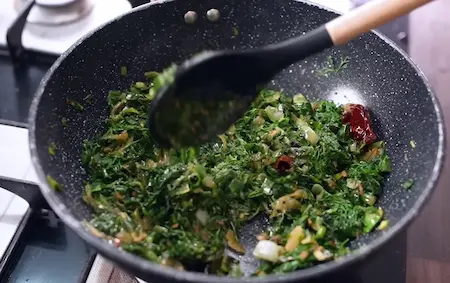
Begin with roughly chopped palak and sauté lightly until it starts to wilt. Follow by adding chopped spring onions and sauté briefly, mixing them well with the spinach. Add bathua leaves next and stir to combine. Now, incorporate the blanched and chopped methi leaves, gently folding them into the mixture. Finally, add chopped dill leaves and combine everything carefully. Adding the greens in stages ensures even cooking and helps keep the color and taste of the Winter Saag Sabji perfect.
Step 5: Season the Sabji
Sprinkle salt, turmeric powder, red chilli powder, coriander powder, and garam masala over the sautéed greens. Mix thoroughly so the spices coat all the leaves evenly. Cook briefly to allow the spices to blend well without overcooking. This step gives Winter Saag Sabji its strong aroma and balanced taste.
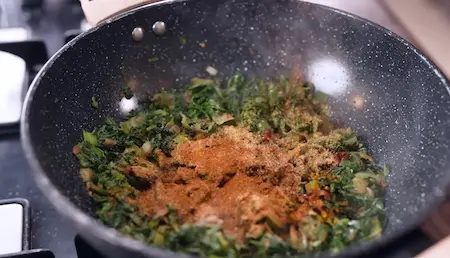
Step 6: Add Tomato and Tamarind
Finally, add sliced tomato and tamarind pulp. Stir lightly and cook just until the tomato softens slightly and releases its juices. Do not overcook at this stage, as it can affect the color. Once done, switch off the heat and let the Winter Saag Sabji rest for a few minutes.

Instructions of Mirch Paratha
Step 1: Prepare the Dough
Start with fresh wheat dough and knead it well until smooth. Add salt and ajwain while kneading. This adds aroma and light flavor. Cover and rest the dough for a few minutes so it becomes easy to roll.
Step 2: Roll the Dough
Divide the dough into portions. Dust lightly with flour and roll one portion into a thin circle or oval shape. Keep it even so it cooks properly.

Step 3: Add Red Chilli and Ghee
Sprinkle red chilli powder over the rolled dough and spread ghee evenly. This gives mild spice and rich taste. Fold or roll lightly to create layers.

Step 4: Cook the Paratha
Heat a tawa and place the paratha on it. Cook until light golden spots appear, then flip and cook the other side with ghee. Press lightly so it cooks evenly and becomes lacchedar.

Step 5: Repeat for Remaining Dough
Repeat the same process for all dough portions. Keep cooked parathas wrapped in a cloth to keep them warm and soft.

Step 6: Serve Hot
Serve hot mirch parathas with Winter Saag Sabji. This combination gives full winter comfort, strong flavors, and a very satisfying meal.
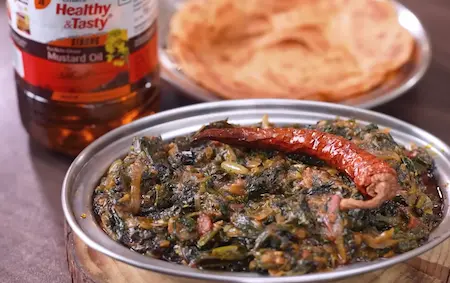
About the Winter Saag Sabji
This Winter Saag Sabji is made using fresh winter greens and cooked in the right way. I use many types of saag together because real winter saag is always mixed. All the greens are added raw and chopped, except methi. I always blanch methi lightly before using it because I do not want its bitterness to spoil the taste of the Winter Saag Sabji.
The base of this Winter Saag Sabji starts with mustard oil on high heat. This step is very important. Heating the oil properly removes its raw bitterness and gives the saag a strong desi flavor. I add mustard seeds, curry leaves, dry red chilli, and garlic and cook the garlic till it turns golden brown. I always cool the pan slightly before adding spices so that nothing burns.
The greens are added one by one in the correct order. First palak, because it cooks fast and releases water. Then spring onion greens, bathua, blanched methi, and finally suva. I never add any sour ingredients early. I have clearly explained that saag turns black only because of acid and oxidation. That is why tomato and tamarind are added only at the end.
The final taste of Winter Saag Sabji is spicy, slightly bitter from methi, earthy from the greens, and nicely tangy from tomato and tamarind. This balance makes Winter Saag Sabji perfect for winters and very comforting to eat.
Winter Saag Sabji Cooking Tips
- Always heat mustard oil on high flame until it lightly smokes to remove bitterness in Winter Saag Sabji.
- Blanch methi lightly before using it to avoid too much bitterness in Winter Saag Sabji.
- Do not add tomato or tamarind early, or the Winter Saag Sabji will turn dark in color.
- Add greens in stages because each green cooks at a different speed in Winter Saag Sabji.
- Cool the oil slightly before adding dry spices so they do not burn.
- If you plan to eat Winter Saag Sabji later, keep it without tomato and tamarind and add them just before serving.
Winter Saag Sabji Pairing Guide
Winter Saag Sabji tastes best with lacchedar mirchi paratha made with ghee or butter. The flaky layers and mild spice of the paratha go perfectly with the bold flavors of Winter Saag Sabji.
You can also enjoy Winter Saag Sabji with plain paratha or simple roti if you want to keep it light. A small piece of jaggery on the side works very well with the slight bitterness of the saag.
For drinks, I prefer something simple when eating Winter Saag Sabji. A glass of chaas or plain curd helps balance the spices and makes the meal more comforting during winters.
Frequently Asked Questions About Winter Saag Sabji
What makes Winter Saag Sabji a winter-special dish?
Winter Saag Sabji uses fresh winter greens like palak, bathua, methi, and suva, which are easily available and taste best during winters.
Why is mustard oil used in Winter Saag Sabji?
Mustard oil gives Winter Saag Sabji its authentic taste. Heating it properly removes bitterness and enhances the flavor of the greens.
Why should methi be blanched before adding to Winter Saag Sabji?
Methi is blanched to reduce its bitterness so that it does not overpower the taste of Winter Saag Sabji.
Why does saag turn black sometimes while cooking Winter Saag Sabji?
Saag turns black due to acid and oxidation. Adding tomato or tamarind too early can affect the color of Winter Saag Sabji.
When should tomato be added in Winter Saag Sabji?
Tomato should be added at the end so it cooks lightly and keeps the color of Winter Saag Sabji fresh and green.
Can Winter Saag Sabji be prepared in advance?
Yes, Winter Saag Sabji can be cooked without sour ingredients and finished later with tomato and tamarind before serving.
What kind of spice level is ideal for Winter Saag Sabji?
Winter Saag Sabji tastes best when it is mildly spicy, allowing the natural flavor of greens to shine.
Which greens cook the fastest in Winter Saag Sabji?
Palak cooks the fastest in Winter Saag Sabji because it contains a lot of water.
Why are dry red chillies used in Winter Saag Sabji?
Dry red chillies add depth and a smoky heat that balances the fresh taste of greens in Winter Saag Sabji.
What is the best accompaniment for Winter Saag Sabji?
Lacchedar mirchi paratha with ghee or butter is the best accompaniment for Winter Saag Sabji, especially in winters.