

Dudhi Muthiya | Soft, Healthy & Traditional Gujarati Snack Recipe

25 Mins

4-5 People

15 Mins
Dudhi Muthiya — A Traditional Gujarati Snack You Need to Try
Did you know that Dudhi Muthiya gets its name from the Hindi word mutthi, which means fist? That is literally how you shape this snack — you press the dough in your fist and roll it into little logs. I found this out the day I made Dudhi Muthiya with Yamini Aunty, one of the most lively and warm people in my building.
Yamini Aunty and her late husband Vipul Uncle were the most cheerful couple in our society. Even after Vipul Uncle passed away a few years ago, Aunty never stopped sharing happiness with everyone around her. And that day, she walked into my kitchen with a big smile and a recipe that I had honestly never made or eaten before — Dudhi Muthiya with Kanki Korma atta. I am so glad she did, because this dish completely surprised me.
Ingredients of Dudhi Muthiya
Servings: 4-5 People
Preparation Time: 15 minutes
Cooking Time: 25 minutes
Main Ingredient
- Dudhi (Lauki / Bottle Gourd) — 1 nos
For Kanki Korma Masala
- Kanki Korma Atta — 1 cup
- Salt — 1 tsp
- Haldi (Turmeric) — 1 tsp
- Dhaniya Powder (Coriander Powder) — 1 tsp
- Jeera Powder (Cumin Powder) — 1 tsp
- Garam Masala — 1 tsp
- Sugar — 1 tsp
- Hing (Asafoetida) — 1 tsp
- Ginger-Garlic-Green Chilli Paste — 2 tsp
- Oil (for moyan/binding) — 2 tbsp
For Tadka (Tempering)
- Oil — 1½ tbsp
- Mustard Seeds (Rai) — 2 tsp
- Ajwain (Carom Seeds) — 1 tsp
- Hing (Asafoetida) — 1 tsp
- Dry Red Chillies — 2 nos
- Sesame Seeds (Til) — 1½ tsp
Instructions of Dudhi Muthiya
Step 1: Prepare the Dudhi (Lauki)
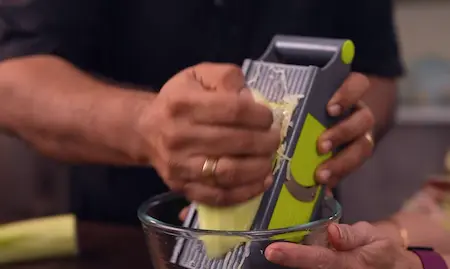
Start by peeling the dudhi (bottle gourd) completely. Once it is peeled, grate it finely using a box grater. Squeeze out the excess water lightly, but do not wring it dry — you need to retain some of that natural moisture because it will help bind the dough without needing extra water. Yamini Aunty always says, the more dudhi you use, the better the flavour and the softer the muthiya.
Step 2: Make the Kanki Korma Masala Dough
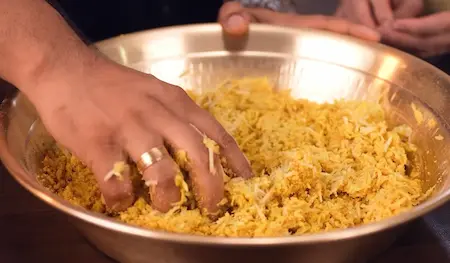
Take a large mixing bowl and add the Kanki Korma atta. Now add salt, haldi, dhaniya powder, jeera powder, garam masala, sugar, and hing one by one. Add the ginger-garlic-green chilli paste and the oil. Aunty was very clear — the moyan (the oil you mix in for binding) should be a generous amount, more than you would normally use. It makes a big difference to the softness of the final muthiya. Now add the freshly grated dudhi into this flour and spice mixture and mix everything together well. The natural water from the dudhi will bring the dough together. Knead it into a soft, smooth dough. Do not add extra water unless the dough is really dry.
Step 3: Shape the Muthiya
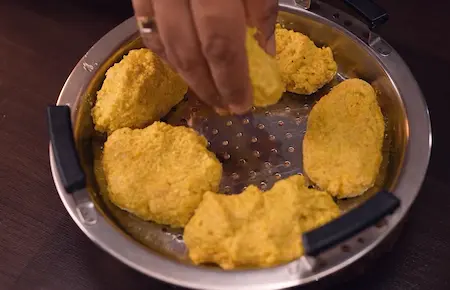
Take a small portion of the dough and press it in your palm, then roll it between both palms into an oval or cylindrical log shape. This is the classic muthiya shape — the one that gave this dish its name. Press them just firmly enough so they hold their shape during steaming. Make them big, like Yamini Aunty suggested, because you will be cutting them into pieces after steaming.
Step 4: Steam the Muthiya
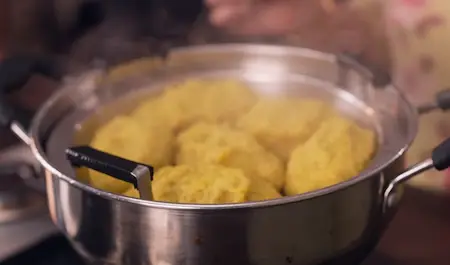
Grease a steamer plate lightly and place all the shaped muthiyas on it. Steam them on medium heat until they are completely cooked through and firm to the touch. To check if they are done, insert a knife or a toothpick — it should come out clean with no sticky dough. Once steamed, remove them from the steamer and let them cool down a little before you cut them.
Step 5: Cut into Pieces
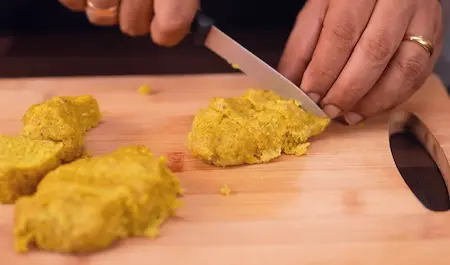
Once the steamed muthiyas have cooled slightly, cut each log into medium-sized round pieces — Aunty says, ek na tran, which means one into three. Cutting them helps them absorb the tadka better and gives you that beautiful golden crispy surface in the next step.
Step 6: Prepare the Tadka (Tempering)
Heat oil in a wide pan. Once the oil is hot, add the mustard seeds (rai) and let them crackle. Then add ajwain, hing, dry red chillies, and sesame seeds (til). Let everything roast for a moment on medium heat so the spices release their aroma. You will smell it — it smells absolutely wonderful.

Step 7: Toss the Muthiya in Tadka
Add the cut muthiya pieces into the pan with the ready tadka. Toss them gently on low flame so every piece gets evenly coated with the tempering without breaking apart. Keep tossing and sautéing lightly until the outside turns golden brown and slightly crispy. Even the little crumbled bits — what Aunty calls the chura — are absolutely delicious.

Step 8: Serve Hot
Your Dudhi Muthiya is ready! Serve it warm as a snack or even as a light breakfast. It pairs perfectly with green chutney or just a hot cup of chai. This is not deep-fried, not heavy, and it is honestly one of the most satisfying things I have eaten in a long time.

About Dudhi Muthiya — The Story Behind This Dish
I will be honest with you — before the day Yamini Aunty came into my kitchen, I had never made Dudhi Muthiya myself. I had eaten it, sure, but never actually cooked it from scratch. And what surprised me the most was how simple, healthy, and genuinely delicious it turned out to be.
The star ingredient here is dudhi, which is the Gujarati name for lauki or bottle gourd. It is one of those vegetables that many people avoid, but when it is used the right way — like in these muthiyas — it adds incredible softness and a subtle natural flavour to the dish. The dudhi is grated and mixed directly into the atta, and its own moisture helps bring the dough together. No extra water needed. That is the beauty of this recipe.
The other ingredient that makes this Dudhi Muthiya special is Kanki Korma atta. This is a flour made from mixed lentils and it is very popular in Gujarati cooking. I had not heard much about it before, but Aunty told me you can easily find it online. If you have never used it, I would say look it up — it is really interesting and adds a beautiful earthy texture to the muthiya.
The recipe itself is steamed, not deep-fried. That alone makes it one of the healthiest Gujarati snacks you can make at home. And after steaming, when you toss the pieces in a hot, aromatic tadka of mustard seeds, ajwain, hing, and sesame — the outside gets this lovely light crispiness that makes every bite so satisfying.
What I loved most about this recipe is what it represents. Yamini Aunty shared something very personal with me — she said she wants the younger generation to learn these recipes before they disappear. Her words stayed with me: "Why not learn these recipes from our elders so their flavour lives on even after they are gone?" And that is exactly why I am sharing this with all of you today.
Cooking Tips for Perfect Dudhi Muthiya
Use more dudhi than you think you need. Yamini Aunty was very clear about this — the more dudhi you add, the softer the muthiya and the better the flavour. The dudhi's natural water content is what brings the dough together, so do not be shy with it.
Do not skip the moyan (oil in the dough). Aunty specifically said the oil you add while mixing the dough — the moyan — should be on the generous side. This is what keeps the muthiya soft and moist from the inside after steaming.
Do not over-squeeze the dudhi. You want to remove excess dripping water, but do not squeeze all the moisture out. That retained moisture is what naturally binds the dough without needing extra water.
Shape them big before steaming. Make the muthiya logs larger than you think you need. You will cut them into three pieces after steaming, so if you start small, the final pieces will be too tiny.
Always check doneness with a knife or toothpick. Insert it into the centre of a steamed muthiya — if it comes out clean, they are ready. If dough sticks, give them a few more minutes in the steamer.
Use low flame when tossing in tadka. After steaming and cutting, when you toss the muthiya pieces in the tempering, keep the flame low. This way they get crispy and golden on the outside without burning or breaking apart.
Do not waste the chura. The little crumbled bits that break off while tossing — what Aunty calls chura — are incredibly tasty. Scoop them up and serve along with the rest. They are full of flavour.
What to Serve with Dudhi Muthiya — Pairing Guide
Green Chutney: This is the most natural and classic pairing for Dudhi Muthiya. A fresh coriander-mint chutney with a little garlic and green chilli cuts right through the warmth of the spices and brings everything together beautifully.
Masala Chai: Yamini Aunty mentioned this herself — Dudhi Muthiya with a hot cup of tea is a wholesome, classic Gujarati breakfast or evening snack. The warmth of the chai and the soft, spiced muthiya is a combination that just works.
Tamarind (Imli) Chutney: If you like a sweet and tangy contrast, a small bowl of imli chutney alongside the muthiya is a wonderful addition. It balances the savoury spices and the sesame notes from the tadka.
Dahi (Fresh Yogurt): A bowl of plain, slightly cold dahi pairs really well with warm Dudhi Muthiya. It cools the palate and adds a creamy, refreshing contrast to the crispy, spiced exterior of the muthiya.
As Part of a Gujarati Thali: Dudhi Muthiya is a natural fit in a traditional Gujarati thali alongside dal, khichdi, rotla, and shrikhand. It works as a side dish or a snack component and adds great texture to the spread.
Frequently Asked Questions About Dudhi Muthiya
1. What is Dudhi Muthiya?
Dudhi Muthiya is a traditional Gujarati steamed snack made from grated bottle gourd (dudhi or lauki) mixed with flour and spices, shaped into small logs or cylinders, steamed until cooked, and then tossed in a light aromatic tempering. The word "muthiya" comes from the Hindi word "mutthi" meaning fist, because the dough is shaped by pressing it in your fist. It is healthy, filling, and very popular across Gujarat as a breakfast and snack.
2. What is Kanki Korma atta and can I substitute it?
Kanki Korma atta is a special flour made from a blend of mixed lentils. It is commonly used in Gujarati cooking and adds a distinct earthy flavour and slightly firm texture to Dudhi Muthiya. Yamini Aunty specifically used this flour in her recipe. You can find it online easily. If you cannot find it, you can substitute with besan (chickpea flour) or a mix of whole wheat flour and besan, though the flavour will be slightly different.
3. Is Dudhi Muthiya healthy?
Yes, absolutely. Dudhi Muthiya is one of the healthiest Gujarati snacks you can make. It is steamed, not deep-fried, which keeps the fat content low. Dudhi (bottle gourd) is high in water content, low in calories, and easy to digest. The use of Kanki Korma atta adds protein from lentils. Even when you toss it in the tadka at the end, you use very little oil — just enough to get a light crispiness on the outside. It is a genuinely wholesome snack.
4. How do I get the dough right for Dudhi Muthiya?
The key is to use enough dudhi and not to over-squeeze it after grating. The natural moisture from the grated dudhi is what binds the dough together. You should also add a good amount of oil (moyan) while mixing — Aunty said more than you might think is needed. Knead it well until you get a soft, smooth dough. Do not add extra water unless the dough is really dry and not coming together at all.
5. How long should I steam Dudhi Muthiya?
Steam the shaped muthiya logs on medium heat until they are firm to the touch and cooked all the way through. The exact time depends on the size of your muthiyas, but it is generally around 15 to 20 minutes. Always do a toothpick or knife test — insert it into the centre of a muthiya and if it comes out clean with no raw dough sticking to it, they are ready.
6. Can I make Dudhi Muthiya without steaming — can I fry them directly?
The traditional method for Dudhi Muthiya is to steam them first and then do a light tadka toss in a pan. This gives the inside a soft, spongy texture and the outside a light golden crispiness without deep frying. You can skip the final tadka toss if you want a purely steamed version, but the tadka toss with mustard seeds, ajwain, hing, and sesame seeds adds a lot of flavour and a lovely crunch.
7. What does Dudhi Muthiya taste like?
Dudhi Muthiya has a soft, spongy inside with a slightly crispy and flavourful outside after the tadka. The taste is savoury with warm spice notes from the garam masala, dhaniya, and jeera, a subtle heat from the ginger-garlic-chilli paste, a hint of sweetness from the sugar, and a nutty aroma from the sesame seeds in the tempering. The dudhi (lauki) keeps the overall flavour light and fresh. The first time I tasted it was when Yamini Aunty made it, and I was completely surprised by how delicious it was.
8. Can I make Dudhi Muthiya in advance?
Yes. You can steam the muthiya logs in advance, let them cool completely, and store them in an airtight container in the refrigerator for up to 2 days. When you are ready to serve, simply slice and toss them in the fresh tadka. This makes Dudhi Muthiya a great option for meal prep or for making ahead for guests.
9. Where does Dudhi Muthiya come from?
Dudhi Muthiya is a traditional Gujarati recipe that has been made in homes across Gujarat for generations. It is the kind of recipe that is passed down from one generation to the next — exactly what Yamini Aunty did when she came into my kitchen. She made this recipe with a very personal message: that we should learn these traditional dishes from our elders before the recipes are lost. Dudhi Muthiya is one of those classic comfort foods that defines Gujarati home cooking.
10. What can I do with leftover Dudhi Muthiya?
Leftover Dudhi Muthiya can be stored in the fridge and reheated in a pan with a tiny bit of oil. You can also crumble leftover muthiya into a quick stir-fry with onions and spices to make a different snack out of it. Even the small crumbled bits — what Yamini Aunty called chura — are delicious on their own and should not be wasted.