

Sindhi Dahi Mirchi Chaat | Tangy, Spicy & Traditional Street-Style Snack Recipe

50 Mins

5-6 People

10 Mins
Sindhi Dahi Mirchi Chaat — The Street Snack That Does Everything Right
You have probably eaten mirchi vada before. But this one is different. This is the version that the Sindhi community has made legendary — a mirchi vada that gets cut up, dunked in creamy sweetened dahi, drizzled with green chutney and tangy saunth chutney, and then topped with boondi, sev and pomegranate seeds. I first came across this style of Sindhi Dahi Mirchi Chaat in Ulhasnagar, Mumbai, and honestly, it blew my mind. You also find versions of it in Rajasthan and Indore — each region has its own little twist.
What makes this recipe special is how it layers flavour and texture. The mirchi is stuffed with a spiced aloo mixture, coated in a crispy besan batter, fried golden, and then turned into a proper chaat. The saunth chutney is slow-cooked with whole roasted spices, tamarind and jaggery — at least half an hour on the stove — so it gets this deep, glossy, concentrate-like richness. The green chutney is fresh and sharp. The dahi is thick, creamy and just slightly sweet. And when all of this comes together? Outstanding.
Ingredients of Sindhi Dahi Mirchi Chaat
Portion/Servings: 5–6 pax
Preparation Time: 10 mins
Cooking Time: 50 mins
For Pounded Masala:
- Coriander seeds – ½ tbsp
- Jeera – 1 tsp
- Saunf – ½ tsp
- Black pepper – 10–12 pcs
- Dry red chilli – 2–3 pcs
For Saunth Chutney:
- Tamarind – ½ cup
- Jaggery – ¾ cup
- Water – as required
- Pounded masala – 1 tbsp
- Dry ginger powder (saunth) – 1 tbsp
- Black salt – ¼ tsp
- Hing – ½ tsp
For Green Chutney:
- Coriander – a handful
- Garlic – 3–4 cloves
- Green chilli – 1–2 pcs
- Jeera – ½ tsp
- Salt – ⅓ tsp
- Water – just for blending
- Lemon – ½ pc
For Sweetened Curd:
- Curd – 1½ cup
- Sugar – 1 tbsp
- Black salt – ¼ tsp
- Fresh cream – ¼ cup
For Aloo Stuffing:
- Oil – 1 tbsp
- Jeera – ½ tsp
- Saunf – ½ tsp
- Ginger chopped – 1 tsp
- Green chilli chopped – 1 tsp
- Hing – ½ tsp
- Onion chopped – 1 pc
- Salt – 1 tsp
- Turmeric powder – ½ tsp
- Red chilli powder – ½ tsp
- Garam masala powder – 1 tsp
- Amchur powder – ½ tsp
- Splash of water
- Potatoes (boiled & peeled) – 4 pcs
Achari Green Chillies:
- 6–7 pcs
For Batter:
- Besan – 1 cup
- Ajwain – ½ tsp
- Salt – 1 tsp
- Baking powder – ¼ tsp
- Water – as required
For Assembling:
- Mirchi vada (fried)
- Sweetened curd
- Saunth chutney
- Green chutney
- Salted boondi
- Chaat masala
- Sev
- Pomegranate seeds
- Coriander chopped – as required
Instructions of Sindhi Dahi Mirchi Chaat
Step 1: Prepare the Saunth Chutney
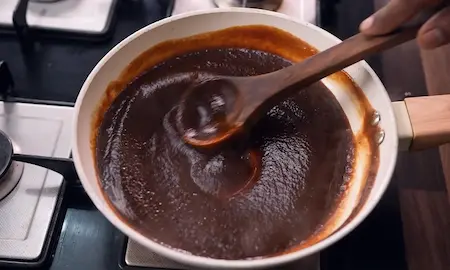
First things first — start with the saunth chutney because this one takes the most time. In a pan, add tamarind, jaggery and enough water. Let them come to a boil and cook until they start to melt and dissolve into each other. While that is happening, dry roast your whole spices — coriander seeds, jeera, saunf, black pepper and dry red chillies. Pound them into a coarse powder. This is my secret spice blend, and it is what gives the chutney that deep fragrance. Add this pounded masala into the boiling tamarind-jaggery mixture and let everything simmer together for at least 15–20 minutes. The spices will bloom and the whole thing will thicken. Once done, let it cool and then blend it smooth in a mixer. The tamarind fibres need to go, the jaggery needs to be fully melted, and the spices need to be completely incorporated. Now strain it to get a completely smooth chutney. Put it back on the gas, add dry ginger powder (saunth — this is where the chutney gets its name), black salt and a little hing. Let it bubble until it turns glossy and shiny. Your saunth chutney is ready.
Step 2: Make the Green Chutney
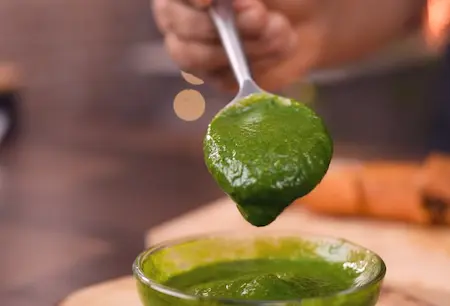
This one is simple and quick. In a mixer jar, add a handful of fresh coriander, 3–4 garlic cloves, 1–2 green chillies, jeera, salt and a little water just to help it blend. Grind everything into a fine, smooth paste. At the end, squeeze in half a lemon for that fresh tartness. Your green chutney is ready. Keep it aside.
Step 3: Prepare the Aloo Stuffing
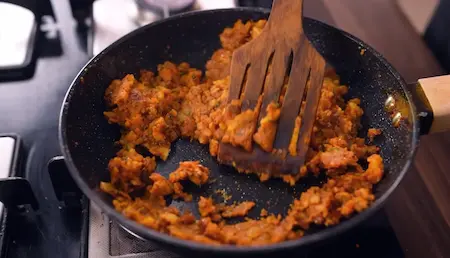
Heat 1 tbsp oil in a pan. Add jeera and saunf and let them crackle. Now add chopped ginger, chopped green chilli and hing — make sure your hing is good quality and fragrant because that is what makes the stuffing shine. Add chopped onion and a pinch of salt, then cook until the onion softens. Add turmeric, red chilli powder, garam masala and amchur powder. Add a splash of water and cook the masala for a minute. Now add your 4 boiled, peeled potatoes and mash them into the masala. Mix well, cook everything together, and let the stuffing cool down before you use it. If you want to keep it Jain, skip the onion and ginger — some Jain folks eat ginger, some don't. That choice is yours.
Step 4: Stuff the Mirchi
Now for the mirchi. The right choice here really matters. Go for thick achari green chillies — the kind used for pickling — but make sure the skin is thin, not thick. A thick-skinned chilli will be very spicy and bitter. The thin-skinned one gives you that big body without the harsh heat. Slit each chilli down the centre and remove the seeds. Now generously fill each one with the aloo stuffing you just made. Press it in well and keep the stuffed chillies aside.

Step 5: Make the Batter and Fry
In a bowl, combine besan, ajwain, salt and baking powder. The baking powder is there specifically to make the coating on the mirchi vada light and puffed up — not dense. Add water gradually and whisk into a thick, smooth batter. Heat oil in a deep pan until hot. Dip each stuffed chilli into the batter, coat it well on all sides, and gently slide it into the hot oil. Fry until crispy and light golden. Remove and drain on paper. Now cut the mirchi vadas into bite-sized pieces so they are easy to eat as chaat.

Step 6: Prepare the Sweetened Dahi
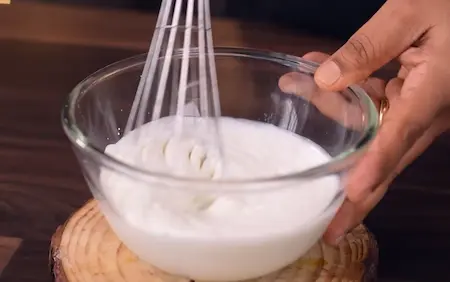
The dahi for this chaat needs to be thick, creamy and balanced — naturally sweet from good-quality curd, but we add a little sugar to enhance it. In a bowl, whisk together curd, sugar, black salt and fresh cream until completely smooth and creamy. The cream is what gives it that rich, coating consistency. When you spoon this over the chaat, it should drape over the pieces — not pool at the bottom. Whisk it well and keep it aside.
Step 7: Assemble the Sindhi Dahi Mirchi Chaat
Now everything is ready. Arrange the cut mirchi vada pieces on a plate. Sprinkle some chaat masala directly on them. Spoon a generous layer of sweetened dahi over the top. Then drizzle the green chutney. Follow with the saunth chutney. Now top with salted boondi, sev, pomegranate seeds and freshly chopped coriander. Serve immediately — while the vada is still crispy on the inside and the outside layers are just starting to soak in all that goodness. This is Sindhi Dahi Mirchi Chaat at its absolute best.

About Sindhi Dahi Mirchi Chaat
This dish is really a gift from the Sindhi community. They have this tradition of taking mirchi vada — which in Rajasthan is eaten as-is with just chutneys — and elevating it into a proper chaat experience by cutting it up, adding dahi and layering on all the toppings. And honestly? It works brilliantly.
You will find different versions of this across India. In Rajasthan, the mirchi vada is classic and standalone. In Indore, there are variations with different stuffings and accompaniments. In Ulhasnagar, Mumbai — where a large Sindhi community lives — this chaat-style version is very popular. So when I say this recipe has roots, it really does.
The saunth chutney in this recipe is the hero component. It is not a quick chutney — it is simmered for at least half an hour with whole roasted spices, and that long cooking time is what develops that incredible depth of flavour. The dry ginger powder, called saunth, is where the chutney gets its name. The hing, the black salt, the tamarind, the jaggery — all of it builds into something that tastes very different from a store-bought imli chutney.
The choice of chilli is also important here. You want the thick achari variety — the ones used for stuffed pickle — but with thin skin. Thin skin means less bitterness and less raw spice heat. If you pick the thick-skinned ones by mistake, the chilli itself will overpower everything. So choose carefully at the market.
Finally, when you eat the assembled Sindhi Dahi Mirchi Chaat, eat it immediately. The besan coating has a great crunch when fresh. The dahi will soften it slightly as it sits, but the contrast of crispy, creamy, tangy and spicy is best in the first few minutes after assembly. Trust me — it is outstanding.
Cooking Tips for Sindhi Dahi Mirchi Chaat
Start with the saunth chutney first. This takes the longest — minimum 30 minutes of simmering after the tamarind and jaggery have dissolved. Get it on the stove before you do anything else.
Always dry roast your whole spices. The coriander seeds, jeera, saunf, black pepper and dry red chillies for the pounded masala must be roasted before you use them. This is what makes the saunth chutney fragrant and layered in flavour.
Strain the saunth chutney after blending. Blending removes most of the fibre but straining gives you a completely smooth, glossy chutney. Do not skip this step.
Pick the right mirchi. Use thick achari green chillies with thin skin. Thick-skinned chillies are very spicy and bitter — they will ruin the balance of the chaat. Look for the ones that are plump and large but feel thin-walled when you press them.
Add baking powder to the batter. Just ¼ tsp of baking powder in the besan batter makes the coating puff up and stay light. Without it, the coating can turn dense and heavy.
Let the aloo stuffing cool before filling. Hot stuffing makes the chilli go limp and can also make the batter slide off during frying. Let it reach room temperature first.
Whisk the dahi well with fresh cream. The fresh cream gives the sweetened dahi a thick, coating consistency. Whisk until smooth so it falls beautifully over the chaat pieces instead of running off.
Assemble and serve immediately. This chaat is best eaten right after assembly when the mirchi vada pieces are still crispy and the textures are at their peak.
Pairing Guide for Sindhi Dahi Mirchi Chaat
Sindhi Dahi Mirchi Chaat is a complete snack on its own, but here is what makes it an even better experience:
Drinks: A glass of chilled masala chaas (spiced buttermilk) is the most natural pairing — it cuts through the spice and the richness of the dahi beautifully. Aam panna works great too, especially in summer. If you want something simpler, cold nimbu pani with a pinch of black salt does the job perfectly.
As part of a chaat spread: If you are putting together a full street-style chaat spread, pair it with dahi puri or papdi chaat on the side. The saunth chutney and green chutney can be shared across all the chaats, which saves time.
Serve with extra saunth on the side: Some people love extra drizzle. Keep both chutneys in small bowls on the table so guests can top up as they like.
Plain mirchi vada alongside: If you want to serve it two ways, keep a few un-cut mirchi vadas on the side. Let people dip them straight into the saunth chutney and green chutney for the classic, no-frills version — then try the full chaat-style plated version. The contrast shows off just how much the assembly elevates the dish.
Occasion fit: This works brilliantly as a monsoon snack, a tea-time treat, a party starter or a light evening meal. It is festive enough for Diwali gatherings and casual enough for a rainy afternoon at home.
Frequently Asked Questions about Sindhi Dahi Mirchi Chaat
1. What is Sindhi Dahi Mirchi Chaat?
Sindhi Dahi Mirchi Chaat is a traditional Indian street-style snack where thick achari green chillies are stuffed with a spiced aloo mixture, coated in besan batter and deep fried to make mirchi vadas. These vadas are then cut into pieces and assembled as a chaat with sweetened dahi, saunth chutney, green chutney, sev, boondi and pomegranate seeds. The dish comes from the Sindhi community and is also popular in Rajasthan, Indore and Ulhasnagar, Mumbai.
2. Which type of chilli should I use for Sindhi Dahi Mirchi Chaat?
Use thick achari green chillies — the type commonly used for making stuffed pickle. The key thing is to choose ones with thin skin, not thick. Thick-skinned chillies are very spicy and bitter, which will overpower the other flavours in the chaat. Thin-skinned achari chillies give you that large, meaty body without being too harsh.
3. How do I make the saunth chutney for Sindhi Dahi Mirchi Chaat?
Simmer tamarind, jaggery and water together until dissolved. Separately dry roast coriander seeds, jeera, saunf, black pepper and dry red chillies and pound them coarsely. Add this masala to the simmering mixture and cook for at least 15–20 minutes. Cool, blend and strain. Put back on the stove, add dry ginger powder (saunth), black salt and hing. Cook until glossy. The saunth — dry ginger powder — is what gives this chutney its name.
4. Can I make Sindhi Dahi Mirchi Chaat without onion and garlic?
Yes, absolutely. For the aloo stuffing, simply skip the chopped onion. For the green chutney, skip the garlic. The dish still tastes great. Some Jain cooks also skip ginger from the stuffing, though that is a personal choice — some Jain folks eat ginger, some do not.
5. Why do I add baking powder to the besan batter?
A small amount of baking powder — just ¼ tsp — helps the besan coating puff up when it hits the hot oil. This makes the outer layer of the mirchi vada light and airy rather than dense and heavy. It is a small addition but it makes a noticeable difference to the texture.
6. Can I prepare parts of Sindhi Dahi Mirchi Chaat in advance?
Yes. The saunth chutney can be made a day or two ahead and stored in the fridge — it actually deepens in flavour. The green chutney stays good for a day. The aloo stuffing can also be prepared a few hours in advance. However, the mirchi vadas should be fried fresh and the chaat should be assembled and eaten immediately for the best texture.
7. What is the difference between Sindhi Dahi Mirchi Chaat and regular mirchi vada?
Regular mirchi vada — especially the Rajasthani version — is typically eaten hot and straight out of the fryer, dipped in chutneys. Sindhi Dahi Mirchi Chaat takes the same mirchi vada, cuts it into pieces, and layers it with sweetened dahi, both chutneys, boondi, sev and pomegranate seeds. It is a chaat-style presentation that makes the dish much more layered and complex in flavour and texture.
8. What makes the dahi special in this Sindhi Dahi Mirchi Chaat recipe?
The dahi is whisked with a little sugar, black salt and fresh cream. The fresh cream is important because it gives the curd a thick, coating consistency that clings to the vada pieces rather than running off. The result is creamy, slightly sweet and gently tangy — a perfect contrast to the spiced vada and the sharp chutneys.
9. Is Sindhi Dahi Mirchi Chaat very spicy?
It has spice but it is well balanced. The sweetened dahi and saunth chutney (which is sweet-tangy) both work to balance the heat from the chilli and the masala. If you want it milder, remove all seeds from the chillies before stuffing and use only 1 green chilli in the aloo stuffing. If you want it hotter, keep a few seeds in and add more red chilli powder to the stuffing.
10. Where does Sindhi Dahi Mirchi Chaat come from?
This chaat-style preparation is credited to the Sindhi community. Sindhi families have a tradition of serving mirchi vada cut up with dahi and chutneys, making it a proper chaat rather than just a fried snack. You find similar versions in Ulhasnagar (Mumbai), Indore and parts of Rajasthan. Each region has its own small variations, but the core idea — elevating fried mirchi vada with dahi and chutney — comes from Sindhi food culture.