

Crispy Aligarh Kachori with Aloo Sabzi — Halwai Style at Home

60 Mins

4-5 People

10 Mins
Crispy Aligarh Kachori with Aloo Sabzi — Halwai Style at Home
Did you know that Aligarh Ki Kachori is double-fried? That is the one secret that makes it different from every other kachori you have ever eaten. Most people fry it once and call it done, but the real halwai style — the one that gives you that loud crunch when you bite into it — always involves two rounds of frying. That extra step changes everything.
I have been making this recipe for a long time and every single time I serve it at home, people ask me how the kachori stays so crispy even after it cools down a little. The answer is always the same — the dough, the frying temperature, and that second fry. In this post I am going to walk you through the whole thing, from making the aloo sabzi to frying the perfect kachori, along with a quick chilled chass on the side to complete the meal.
Ingredients of Aligarh Kachori with Aloo Sabzi
Portion Serving: 4–5 people
Preparation Time: 5–10 minutes
Cooking Time: 60 minutes
For Aloo Sabzi:
- Oil — 1 tbsp
- Bay leaf — 1 pc
- Black pepper — 6–7 pcs
- Jeera (cumin seeds) — 1 tsp
- Turmeric powder — ½ tsp
- Water — a splash
- Potatoes — 5–6 pcs (diced with skin on)
- Kasoori methi — 1 tsp
- Dry ginger powder — 1 tsp
- Salt — 1 tsp
- Water — a little (to cook potatoes)
- Coriander powder — 1 tbsp
- Black salt — ½ tsp
- Yellow chilli powder — 1 tsp
- Red chilli powder — ½ tsp
- Amchur powder — 1 tsp
- Ginger, chopped — 1 tsp
- Green chilli, chopped — 1 tsp
- Water — a splash (to adjust consistency)
- Garam masala — 1 tsp
- Hing water — 1½ tbsp
- Fresh coriander, chopped — ½ tbsp
For Hing Water:
- Hing (asafoetida) — ½ tsp
- Water — a little
For Kachori:
- Wheat flour (atta) — 2 cups
- Refined flour (maida) — 1 cup
- Ajwain (carom seeds) — 1 tsp
- Kasoori methi — 1 tsp
- Oil — 1½ tbsp
- Water — as required
- Oil — for frying
For Chass (Spiced Buttermilk):
- Curd — 1 cup
- Water — a little (chilled)
- Salt — a pinch
- Jeera powder — ½ tsp
- Ginger, chopped — ½ tsp
- Fresh coriander, chopped — 1 tbsp
Instructions of Aligarh Kachori with Aloo Sabzi
For Aloo Ki Sabzi
Step 1: Prepare the Tempering
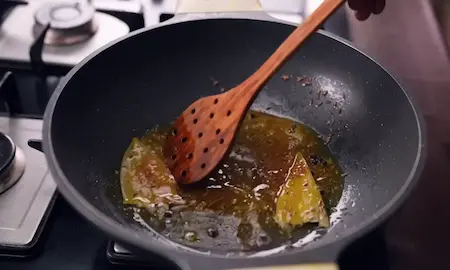
Place a heavy-bottomed pan or kadai on medium flame and add 1 tbsp of oil. Once the oil is hot, add 1 bay leaf, 6–7 black peppercorns, and 1 tsp of jeera. Let the spices crackle and release their aroma into the oil — this is the base of the sabzi's flavour, so give it a good 30–40 seconds.
Once the jeera turns golden and fragrant, add ½ tsp of turmeric powder. Sauté briefly for just about 10 seconds. Immediately add a splash of water to prevent the turmeric from burning. Burnt turmeric will make the whole sabzi bitter, so do not skip this step.
Step 2: Cook the Potatoes
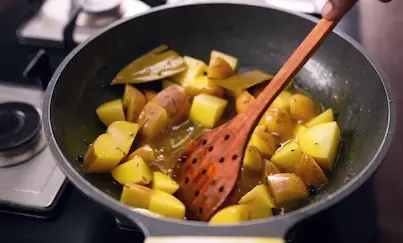
Wash 5–6 potatoes very well under running water. Keep the skin on — do not peel them. The skin adds a slight earthy texture to the sabzi and holds the potato pieces together during cooking. Cut them into medium-sized dice — not too small or they will break down completely, not too large or they will take too long to cook.
Add the diced potatoes with skin directly into the pan. Mix well so every piece gets coated evenly with the turmeric and oil. Make sure all the potato pieces are turning yellow from the turmeric coating.
Step 3: Add Flavouring Spices
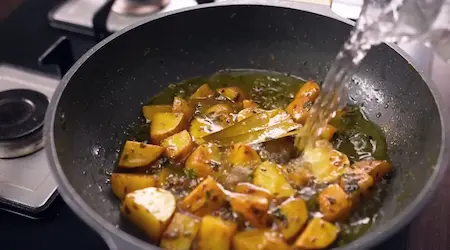
Now add 1 tsp of kasoori methi, 1 tsp of dry ginger powder, and 1 tsp of salt. Mix everything properly so the spices are evenly distributed across all the potato pieces.
Add a little water — just enough to partially cover the potatoes. Cover the pan and cook on medium flame until the potatoes are soft and cooked through. Check with a knife or fork — it should go in easily without any resistance. This will take around 12–15 minutes depending on the size of your potato pieces. Keep checking in between and stir occasionally so nothing sticks to the bottom.
Step 4: Finish the Sabzi
Once the potatoes are fully cooked and most of the water has reduced, it is time to add the finishing spices. Add 1 tbsp coriander powder, ½ tsp black salt, 1 tsp yellow chilli powder, ½ tsp red chilli powder, and 1 tsp amchur powder. These spices together give the sabzi its signature tangy, spicy, layered flavour that is specific to UP-style kachori accompaniments.
Add 1 tsp of chopped ginger and 1 tsp of chopped green chillies. Mix everything together on medium flame for a minute so the dry spices cook out and do not taste raw.
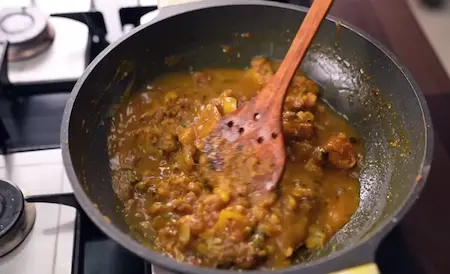
Now take the back of your spoon or spatula and lightly mash three to four potato pieces right in the pan. Do not mash everything — you want some chunky pieces and some soft mashed potato to naturally thicken the gravy. This is the halwai technique for getting that thick, clingy sabzi consistency without adding any extra flour or thickener.
Add a splash of water to adjust the consistency to your liking. Let it come to a simmer. Add 1 tsp of garam masala and mix well.
Finally, add 1½ tbsp of hing water (prepared separately by dissolving ½ tsp hing in a little water). Stir it in and finish with ½ tbsp of freshly chopped coriander. The aloo sabzi is ready.
For Kachori
Step 1: Prepare the Dough
In a large parat or wide mixing bowl, add 2 cups of wheat flour (atta) and 1 cup of refined flour (maida). The combination of both flours is important — the wheat flour gives the kachori a slight nuttiness and body, while the maida helps bind it and gives the crust its crisp bite.
Add a pinch of salt, 1 tsp of ajwain (carom seeds), and 1 tsp of kasoori methi. Mix the dry ingredients together first so everything is evenly distributed. The ajwain also helps with digestion, which matters when you are eating deep-fried food.
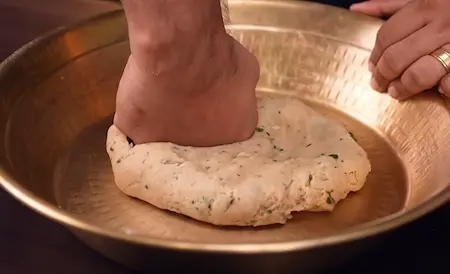
Add 1½ tbsp of oil and mix it into the flour with your fingers, rubbing it in until the flour starts to look slightly crumbly and sandy. This is called the moyan or shortening step, and it is what gives the kachori its layered texture on the inside. Do not skip this.
Now add water gradually — a little at a time — and knead the dough. The dough needs to be hard and stiff — much stiffer than a roti or puri dough. A soft dough will puff up and hollow out during frying. A stiff dough stays dense and gives you the thick, solid crust that Aligarh Kachori is known for. Knead well for 3–4 minutes and set aside to rest for 5 minutes.
Step 2: Shape the Kachori
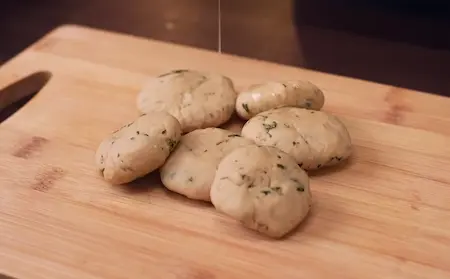
Divide the rested dough into equal portions — roughly the size of a large lemon. Apply a little oil on your palms to prevent sticking. Take each portion and roll it into a smooth ball.
Roll each ball into a small, thick disc — thicker than a puri, but smaller in diameter. The thickness is the key here. You are not trying to roll it thin. A thick disc will give you a solid, dense kachori shell that stays crispy for longer. Do not press too hard while rolling or the disc will become uneven. Aim for an even thickness throughout each piece.
Step 3: First Frying
Heat enough oil in a deep kadai for frying. The oil temperature for the first fry should be medium — not too hot. If the oil is too hot, the outside will colour and set before the inside has a chance to cook through. You want the kachori to cook slowly and evenly on this first round.
Gently slide in the shaped kachori one by one. Do not overcrowd the kadai — fry in batches. Fry the kachori lightly on medium flame until they are half-cooked and look pale and set — no golden colour, just a slight change in the surface from raw dough to cooked dough. This will take around 4–5 minutes per batch.
Once half-cooked, remove the kachori from the oil using a slotted spoon and drain them. Let them rest and cool slightly for a minute or two before going in for the second fry. This resting moment is important — it allows the steam inside to settle so the second fry finishes the job properly.
Step 4: Second Frying
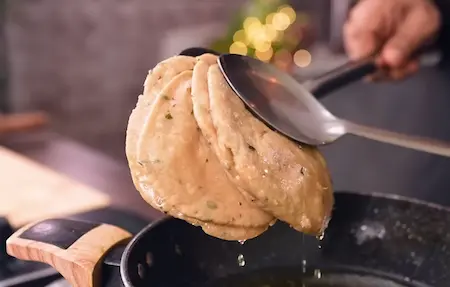
Now increase the flame slightly and bring the oil to a higher temperature — hotter than the first fry but not smoking hot. Gently slide the half-fried kachori back into the hot oil. This second fry is what creates the hard, golden, crispy shell that makes Aligarh Kachori so special.
Fry until the kachori turn a deep golden brown all over. Turn them carefully with a slotted spoon to ensure even browning on all sides. This second fry takes around 3–4 minutes. Once they are golden brown and look crispy and hard on the surface, remove them from the oil.
Place them immediately on a tissue-paper-lined plate to drain the excess oil. The tissue will absorb the surface oil and keep the kachori crispy instead of greasy.

For Chass (Spiced Buttermilk)
In a bowl, add 1 cup of fresh curd. Using a whisk or a hand churner, whisk the curd well until it is completely smooth and lump-free. Lumpy curd will give you an uneven, grainy chass, so take your time with this step.
Pour in chilled water — a little at a time — and keep mixing until the chass is smooth, light, and slightly frothy. Adjust the amount of water based on how thick or thin you like your chass.
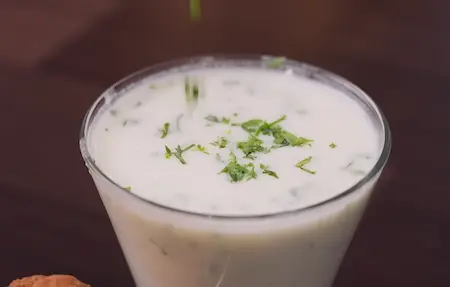
Add a pinch of salt, ½ tsp of jeera powder, ½ tsp of finely chopped ginger, and 1 tbsp of freshly chopped coriander. Stir everything together. Taste and adjust the salt if needed. Serve chilled.
Serving
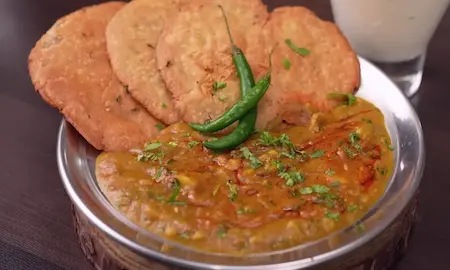
Serve the hot, crispy Aligarh Kachori on a plate with a generous ladle of spicy aloo sabzi poured right on top. Pour the chilled chass into a glass on the side. Eat immediately while the kachori is still hot and at its crispiest — this is the classic Aligarh-style meal that has been loved for generations.
About This Aligarh Kachori Recipe
Aligarh Kachori is not your average kachori. It comes from Uttar Pradesh and it has a very specific character — the outer crust is thick, hard, and almost biscuit-like in texture, while the inside stays soft and layered. It is the kind of kachori that you find at old halwai shops, served on a sal leaf plate with a generous ladle of aloo sabzi poured right on top.
What makes this recipe special is the aloo sabzi that goes with it. I keep the potatoes with the skin on, which adds a slightly earthy texture and holds the potato together even after cooking. The sabzi has a very distinct tangy flavour because of the amchur powder and black salt. I also use hing water instead of adding hing directly to the oil — this gives a much cleaner, more even flavour without any bitterness.
For the kachori dough, I use a mix of wheat flour and refined flour. The ajwain and kasoori methi in the dough are not optional — they are what give the kachori its signature aroma. The dough has to be on the stiffer side, not soft like a roti dough. A soft dough will puff up and hollow out. A stiff dough will give you that solid, crispy shell that Aligarh kachori is famous for.
The double-frying method is the most important part of the whole process. You fry the kachori first on medium flame until it is half-cooked and has no colour. Then you take it out, let it rest for a minute, and fry it again in hotter oil until it turns golden brown. This two-step process is what ensures the kachori is cooked all the way through on the inside while being completely crisp on the outside.
To finish the meal, I make a simple chilled chass — just whisked curd, cold water, salt, jeera powder, a little chopped ginger, and fresh coriander. It balances out all the spice from the sabzi and the richness of the fried kachori perfectly.
Cooking Tips for the Perfect Aligarh Kachori
Keep the skin on the potatoes. I always wash the potatoes well and cook them with the skin on for the aloo sabzi. The skin adds texture and holds the potato pieces together so the sabzi does not become mushy.
Make hing water separately. Instead of adding hing directly to hot oil, dissolve it in a little water and add that at the end of cooking. This gives a much smoother, deeper flavour to the sabzi without the raw bitterness that comes from direct heat.
Mash a few potatoes while cooking. Once the potatoes are cooked, lightly mash three or four pieces right in the pan. This thickens the gravy naturally without needing any extra starch or flour.
Keep the kachori dough stiff. The dough should be harder than a roti dough. If it is too soft, the kachori will puff up and hollow out inside instead of staying dense and crispy. Add water slowly and knead firmly.
Roll the kachori thick. Do not roll them thin like a puri. A thick disc is what you want. This is what gives Aligarh kachori its solid bite.
Always double-fry. The first fry on medium flame cooks the kachori through without adding colour. The second fry in hotter oil gives the golden crust. Never skip the second fry — it is the whole point of halwai-style kachori.
Drain on tissue paper. After the second fry, place the kachori on a tissue-lined plate so the excess oil is absorbed. This keeps them crispy and not greasy.
Serve immediately with the sabzi. Aligarh Kachori is best eaten hot. Pour the aloo sabzi right on top and eat it straight away while the crust is still at its crispiest.
Pairing Guide for Aligarh Kachori
Spicy Aloo Sabzi — This is the classic and non-negotiable pairing. The tangy, spiced potato gravy with amchur, black salt, and hing water is what Aligarh Kachori was made to be eaten with. Pour it generously on top.
Chilled Chass (Spiced Buttermilk) — The chass I make with this recipe — cold curd, water, jeera powder, ginger, and coriander — is the perfect drink alongside this meal. It cools down the heat from the green chillies and red chilli powder in the sabzi.
Green Coriander Chutney — A fresh green chutney made with coriander, green chilli, garlic, and lemon adds a sharp, herby contrast to the richness of the fried kachori.
Imli (Tamarind) Chutney — The sweet and sour flavour of tamarind chutney works brilliantly with Aligarh Kachori, especially if you like a little sweetness to balance the spice.
Hot Masala Chai — In Aligarh and across UP, kachori and chai is a classic morning combination. The strong, milky tea cuts through the oil perfectly and makes this a proper street-style breakfast experience at home.
Sliced Onion with Lemon and Salt — A simple side of raw onion rings, squeezed with lemon and sprinkled with black salt, is a very traditional accompaniment that adds a sharp crunch to every bite.
Frequently Asked Questions About Aligarh Kachori
1. What makes Aligarh Kachori different from regular kachori?
Aligarh Kachori is double-fried, which gives it an extra crispy, almost biscuit-like outer crust. The dough is also made stiffer than usual and is rolled thicker, so the kachori stays dense and crunchy instead of hollow and puffy. The combination of wheat flour and refined flour in the dough, along with ajwain and kasoori methi, also gives it a very distinct flavour that you do not find in other types of kachori.
2. Why do we double-fry the kachori?
The double-frying method is the key to getting that halwai-style crunch. The first fry on medium flame cooks the kachori all the way through without giving it any colour. The second fry in hotter oil then creates a hard, golden, crispy shell. If you fry it only once on high heat, the outside will brown too fast while the inside remains undercooked.
3. Can I make Aligarh Kachori with only maida (refined flour)?
You can, but I prefer using a mix of wheat flour and refined flour. The wheat flour adds a slight nuttiness and makes the kachori a little more wholesome. Using only maida will give you a very white, smooth kachori — it still tastes great but has a slightly different texture and flavour compared to the mixed dough version.
4. Why do we keep the skin on the potatoes for aloo sabzi?
Keeping the skin on the potatoes adds a slightly earthy texture to the sabzi and helps the potato pieces hold their shape during cooking. It also adds a bit of extra flavour. Just make sure you wash the potatoes very well before dicing them.
5. What is hing water and why is it used in the aloo sabzi?
Hing water is simply hing (asafoetida) dissolved in a small amount of water. Instead of adding hing directly to hot oil at the start, you dissolve it in water and add it towards the end of cooking the sabzi. This gives a smoother, more evenly distributed flavour without the sharp bitterness that can come from burning hing in oil.
6. How do I store leftover Aligarh Kachori?
Aligarh Kachori stays crispy for several hours at room temperature because of the double-frying. If you want to store it for longer, keep it in an airtight container. To reheat, use an air fryer or oven at a low temperature for a few minutes — this will bring back most of the crunch. Avoid microwaving as it makes the kachori soft.
7. Can I prepare the aloo sabzi in advance?
Yes, the aloo sabzi can be made a few hours in advance and reheated before serving. The flavours actually develop further as it sits, so it can taste even better after some time. Just add a little splash of water when reheating if the gravy has thickened too much.
8. What oil should I use for frying Aligarh Kachori?
Any neutral cooking oil works well — mustard oil, sunflower oil, or refined vegetable oil. If you want an authentic halwai-style flavour, mustard oil is the traditional choice and gives a slightly pungent, earthy character to the kachori.
9. How do I know when the kachori is cooked through on the first fry?
On the first fry, the kachori should look slightly set and pale — it should have lost its raw doughy look but should not have any golden colour. This takes around three to four minutes on medium flame. If the oil is too hot, the outside will colour too fast. Keep the flame on medium throughout the first fry.
10. What is the chass served with Aligarh Kachori?
Chass is a simple spiced buttermilk made by whisking curd with chilled water, salt, jeera powder, chopped ginger, and fresh coriander. It is light, cooling, and refreshing — the perfect drink to have alongside a rich, spicy meal like Aligarh Kachori with aloo sabzi. It balances out the heat and richness of the dish beautifully.